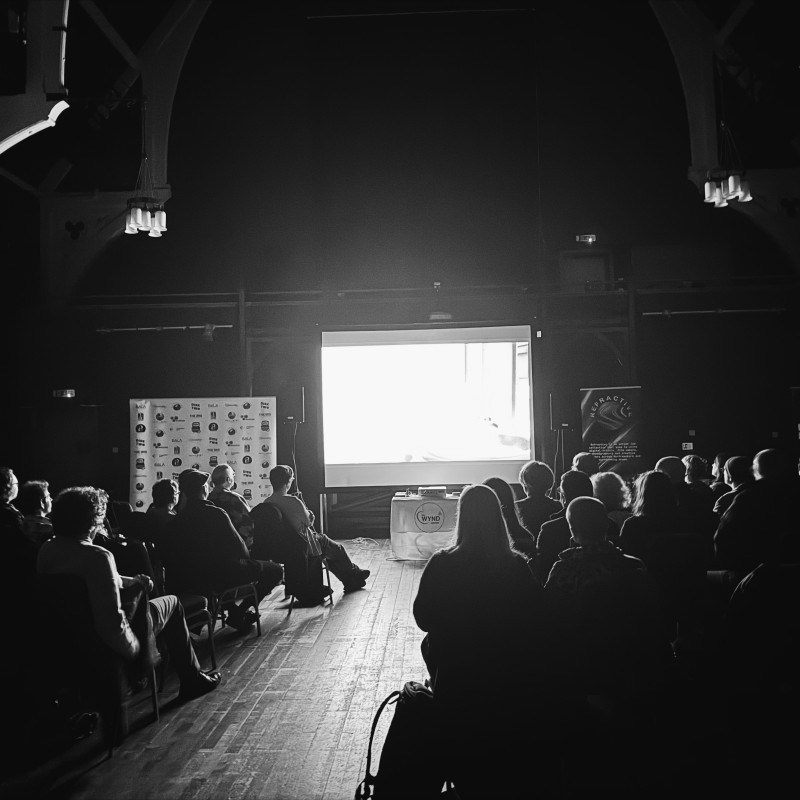
If you’re missing Paisley Docs: Rebels and Innovators, here is a throwback to our interview with Talk About Lonely’s Director Charles Wilkinson on his journey in filmmaking and the importance of addressing the topic of mental health through film.
Charles is a Canadian filmmaker with a large body of documentary and dramatic film and television to his credit, and his films have been selected at numerous international festivals. Before becoming a filmmaker he was a well-known country singer/TV performer/recording artist in his youth. He ‘dropped out’ for a decade to build a log house in the mountains, worked logging, mechanical, building, and welding before attending film school.
How did you get started in filmmaking?
It’s an interesting story. I was incorrigible as a kid, and I had my own radio show in my own mind from the time I was three years old. I used to sing myself to sleep every night, and my parents would go mental, pounding on the wall, telling me to shut the hell up. Then they decided to channel that energy into singing lessons, and so I took singing lessons for years. Then my brother and I went into a talent show and did well, I guess. We were part of a five-member cast of a variety TV show for years that played in Western Canada. I grew up in show business. We recorded a show every week for television, and then we toured and recorded and stuff like that. So I didn’t grow up like a normal human, being in a show. I took seven, eight, nine years off to learn how to do some things that might be useful, like building and welding and stuff like that.
Then I went to a university. I flunked out of high school, but they let me go to university for some reason and I started learning about film. I thought it would be awesome, and I was also interested in learning about audio and sound. I just took to it like a duck to water. I thought it was where I was going to spend my life, and it has been. A couple of my schoolmates and I came up with an idea when we were in our second last year at film school for a documentary, and we made a little clip as an assignment, and then we pitched it to our national film board, and they went “hey, this is a great idea”. So I actually got to be a commercial director while I was still in film school, like a paid for hire director. I then got to make a bunch of different Canadian features and American television movies. I started with documentary, then moved to drama, and then I just got tired of it. But it did help me acquire some skills in story telling, and I’ve been able to use that for the last 15 years or so with my partner Tina making social commentary documentaries, and it’s been a joy.
What was it in particular that drew you to the topic of loneliness and why did you want to make a documentary about it?
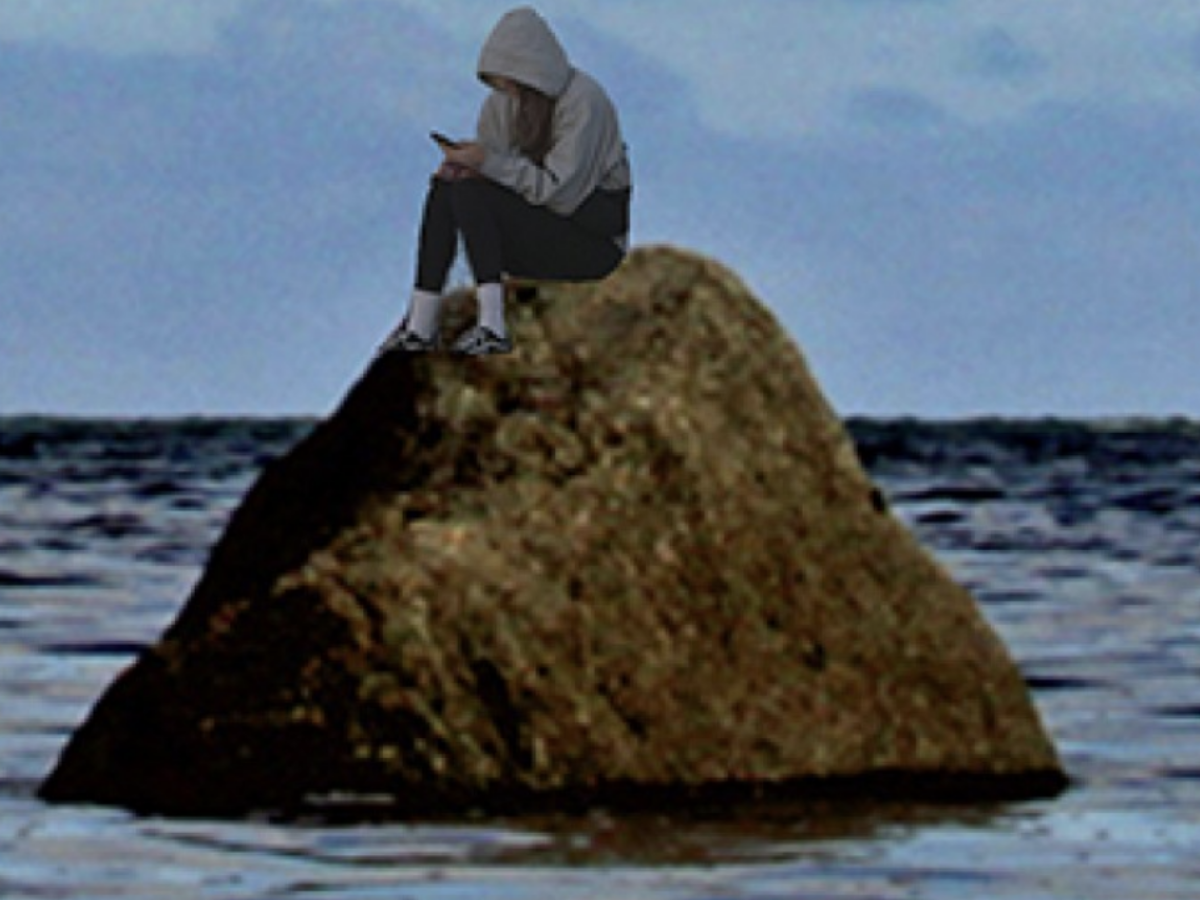
I was interested by the fact that in the last seven or so years you can’t go anywhere without seeing people staring at their phones, and its noticeable how much less people talk to each other now. If you go speak to somebody, they kind of look startled as if they are like, “what are you talking to me for?”. And we’re seeing these trends in society with automated checkouts instead of talking to a person – at a gas station you used to talk to some guy whilst they filled up the tank or check the oil, now you just swipe your card. What I’ve been really concerned with is how people are getting siloed more and more into this thing that seems like connectivity, but actually kind of isn’t.
That’s really interesting. The short film we showed Talk About Lonely alongside was a film called Walking to Connect by Elina Bry, and in the film the participants used smartphones and audio technology to record their walks around Greenock. It was really interesting because they talk about the fact they are using their phones in a different way than usual, and that it created a different way of connecting with people. It became more of a social experience than just sitting on your phone or taking pictures of yourself, which had some interesting parallels with your film.
I mean, you know, it would be foolish to say that there weren’t some positive uses for these technologies. I mean, it’s not a dark cloud that has no silver lining at all, but you have to weigh it up with some of the negatives.
Of course! Your film has a wide range of participants in it, what was the process of finding the various experts and members of the public to join the project?
In Canada, we have a policy at our publicly financed universities, where all of the professors are listed on a website. But then there were also some people in the field that you track down. For example, the expert towards the end of the film who talks about the environmental aspects of loneliness, I found him in an article in the Guardian and I was stunned to find that he lives in Seattle. Some of the others are personal friends, we almost always rope our friends into helping us with films. We also started this project really in COVID and so we couldn’t go anywhere. We had to just stay close to home and it meant that the film became a bit of a homage to my neighbourhood. So much of it is shot within a 5Km radius of where I am sitting right now. The participants were from a range of places, but the scale and size of the city became a really impactful element of the film. Personally, I found it quite alien, but it worked really well within the context of thinking about loneliness, to be surrounded by that many people, but to be so isolated.
The scale of the city really comes across in some of the incredible sweeping shots of the urban space, what was the most difficult thing to try and film?
One shot that took a lot of planning, and a lot of luck, was the one with people running into the water on New Year’s Day. It’s called the Polar Dip here. We had to get access to a private dock, and it was very small – we were pitching around and these boats were coming in. One of our lenses was stabilised but the other wasn’t. So you just kind of trying to rock with it and shoot it in slow motion. Some of the crowd scenes can be challenging as well because of the ethics involved with filming in a crowd. You can’t talk to everybody, and explain what the shots will be used for exactly. I don’t know if you’ve noticed, but people are shooting more and more in public, and legally you don’t have a right to your image in public. But there is a moral and ethical component to it that sometimes makes the decisions difficult.
Loneliness is such a big topic to cover, what was it that made you decide to focus on the different approaches to it that you did?
We tried to subdivide the subject into the various contributing factors. Because when you just say loneliness, it’s just impossible to approach because there are quite a few angles to it. And so we tried to start from the outside and work our way in to try and get to the core of what is causing loneliness, if there is a core for that. I mean, there are some things that you could say are the cause of loneliness, a smartphone meaning that you are not talking to your friends for example, but that’s relatively superficial. There are much deeper, fundamental things going on. We are being urged at almost every turn not to talk to each other, what’s going on there? Why is it that public parks and spaces are being de-emphasised? And so we tried to go from outside in and really understand what was fundamentally going on.
Do you have any advice that you would give to filmmakers that are approaching a documentary or a feature, either relating to loneliness or mental health? Or just in general, as someone that’s been making a documentary for a long time?
I mean, there’s so many things to say. Often people will talk to me often about ideas for a movie, they’ll say, “hey, I got a great idea for a movie”, and I’d say 95% of the time it’s a subject, it’s not a story. I can’t really grasp a subject for a film until it becomes a story, and what makes a story is character. I’ll give you an anecdote, there was a book written by an American author named Robert Persig called Zen and the Art of Motorcycle Maintenance. It’s not really about motorcycles, its a philosophy book. In it he was teaching creative writing at a community college, and his best student came to him in tears because she couldn’t figure out how to write the essay that had been assigned about this small town that they were living in. She said “this town is boring and there is nothing to write about”. So he told her to pick a building in the town and write about that, but she still couldn’t. So he told her to pick a brick and write about that, and she came back with 50 pages. That’s how I try to approach stuff to, by finding out what or who the character is and that becomes the story. The subject is just a survey of the film, its the stories about specifics and people that are the most interesting. The other thing is just don’t give up. You have a voice, and there will be people that want to hear it. I’ve had films that didn’t go well and films that did go well. If you get discouraged by the ones that don’t do well, then you know, but don’t give up!
You can learn more about Charles’ film Talk About Lonely and his other work via charleswilkinson.com.
Interviewer: Jenny Alexander